At the Women's march

At the Women's march
All Lives Matter

Never Again

Never Again
We Won't Go Back

Sunday, June 10, 2012

NEWLY DISCOVERED REVIEW OF "BALCONY"

While I was looking for something else I came upon a 2005 review of my book A BALCONY IN NEPAL: GLIMPSES OF A HIMALAYAN VILLAGE. My favorite line is "Written by an unlikely trekker -- a 70 year old grandmother..." Eli Bendersky, the reviewer, has given me permission to post the review, so here it is: http://eli.thegreenplace.net/2005/11/13/book-review-a-balcony-in-nepal-by-sally-olds/ "November 13th, 2005 at 11:31 pm When I strolled through a small bookshop in Pokhara (Nepal’s 2nd largest city) most of the books I ran into were (unsurprisingly) about mountaneering and treeking. But this was not what I was looking for. I was rather hoping to find a book that tells about the lives of Nepalis – especially the “real”, rural inhabitants of this beautiful country, and not the shop-keepers tourists usually run into. “A balcony in Nepal” is such a book. Written by an unlikely trekker – a 70 year old grandmother, it tells about the few months the author has spent in Badel – a small village in the east of Nepal, not far away from Mt. Everest. Mrs. Olds trekked a couple of times in Nepal with her husband and fell in love with the country, to which she came back several times, on a quest of “looking for herself”. The narrative is autobiographical, feeling like a journal carefully collected and edited. It is very readable and can be finished quickly. The author tells about the lives of people in a typical Nepali village, their day-to-day hardships, peculiar rituals and, most of all, their apparently illogical happiness and peace of mind. The book keeps coming back to the inevitable comparison of the rich life in the west versus the poor conditions people live in Nepal, and yet somehow they don’t look less happy for it. They look more happy, if a comparison must be made. Some point about appreciating what we have… All in all, a charming book. Not only does it tell a lot about the life of Nepalis, it also raises quite a few interesting philosophical points, so it’s an interesting read even for people not really interested in Nepal itself."

Saturday, June 9, 2012

"A BALCONY IN NEPAL" NOW AN E-BOOK

This is exciting to me -- the book I wrote about an ancient way of life is now very much a 21st-century e-book, as well as a paperback edition. The e-book is much less expensive and can be ordered from www.BarnesandNoble.com, www.amazon.com, and www.iUniverse.com. The life in Badel that we experienced and wrote about has already changed greatly. Buddi, our guide, now lives in Ohio with his wife and three children. His parents and uncle (our librarian) have moved to Kathmandu. Many of the young people we met have left the village to work in other countries. For a while some of the Maoist guerrillas were occupying the library building and extorting food from the villagers, but I think they have all gone now. Our last contribution to the village was money to build toilets, which I have heard are indeed being used and taken care of. Kumari, the young girl whose surgery my fellow trekker and I paid for to correct her cleft lip, has married. So has Laxmi, the young untouchable girl we coaxed into our library to hold a book for the first time in her life. And so life goes on.

Wednesday, May 30, 2012

Times Have Changed but Moms Are Still Being Bullied

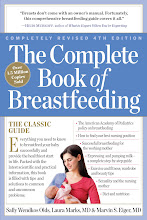
When the first edition of my book The Complete Book of Breastfeeding was published in 1972, doctors, hospital nurses, and grandmothers were discouraging women from breastfeeding, saying things like “You’re not cut out to be a cow,” or “Your breasts are too small to have enough milk,” or – as one woman told her daughter, “Why can’t you be like everybody else and do the natural thing – give the baby a bottle?” And a prominent pediatrician told me that nursing a baby beyond one year was abnormal and could cause major psychological problems in the child (this, despite World Health Organization and UNICEF recommendations to nurse for two years or more and despite no evidence that extended nursing caused problems). The year 1971, when I was researching and writing the book, marked the lowest rate of breastfeeding in the history of this country. Fortunately, health care providers and society at large now recognize that breastfeeding provides the very best start in life, for both physiological and psychological reasons. But now some of the same forces that told women not to breastfeed have mobilized so strongly that they’re now telling her she has to – all day and all night. Women who either cannot breastfeed (a tiny minority), cannot organize their lives to do it (like working women whose jobs don’t offer opportunities to pump or require extensive travel), or just don’t want to (often because they don’t have enough information or enough support) are being pressured in the hospital, in the neighborhood, and in the media. Those who do nurse are told by some authority figures that they have to do it a certain way – every time the baby whimpers, all night long with the baby in bed with mom and dad, all day long as mom walks around carrying her baby in a sling, and for as many years as her child wants to stay at the breast. All these practices are fine – if that’s what the mom wants to do – but not if she’s made to feel that by not following this rulebook she’s a bad mom or an inadequate mom who will doom her child to an unhappy or unhealthy life. TIME Magazine jumped into the mommy rules and the mommy wars in a disgustingly sensational way that did a disservice to both the mother and the child – and to legions of nursing couples -- on its May 21 cover. As everyone in the parenting world now knows, this showed a provocative photo of a mother and a nursing preschooler in a pose that’s about the unlikeliest nursing position I can think of -- and I have seen plenty of mothers nursing older children. They don’t do it standing hands on hips, with both mom and child looking at the camera instead of each other. I can just see the photo shoot with both mom and child getting constant directives to make the most outrageous photo possible. Then the cover line with the photo posed the demeaning question “Are You Mom Enough?” The cover story went on to profile Dr. William Sears, the pediatrician who has written some 40 books, mostly promoting what he calls “attachment parenting,” the philosophy that babies thrive on almost constant nursing, body contact, and parental co-sleeping, and that babies deprived of some of these elements are likely to develop serious problems of maladjustment. The article only briefly alludes to the fact that there’s no evidence for such dire results from more typical loving parenting. Basically, the sentence I wrote in the first edition of my book (and have repeated in all revisions, including the 2010 4th edition), which has in fact been upheld by research, still holds: A child raised in a loving home can grow up to be healthy and psychologically secure no matter how she or he receives nourishment.

Tuesday, May 1, 2012

“THE BEST EXOTIC MARIGOLD HOTEL”

What a delight! I was recently privileged to be invited to a pre-release screening of this delightful new movie from Great Britain featuring some of our favorite grandparent-aged actors: Judi Dench, Tom Wilkinson, Maggie Smith, Bill Nighy, and other luminaries of British film. They played their roles without vanity – with wrinkles and wattles in full view, which didn't take anything away from their good looks. The story is about a group of retired people with limited means, none of whom know each other (except for the one married couple), who respond to a brochure offering an inexpensive residence in “The Best Exotic Marigold Hotel.” When they get to Jaipur they find out that the brochure had been photo-shopped and the pictures of the hotel do not represent what it is today, but what Sonny, the ditzy and appealing young owner, envisions it to be someday. As he says, “In India everything will turn out okay in the end and if it is not okay, it is not the end.” (This reminded me of my husband’s and my mantra when we went to India and kept encountering one surprise after another, and not always welcome surprises: “T.I.I.” for “This Is India.”) Dev Patel (of “Slumdog Millionaire”), who plays Sonny, heads a strong Indian cast, including actors portraying his gorgeous mother and a young untouchable servant whose story is one of many moving narratives. The life stories of the Brits, which brought them to Jaipur, are absorbing, as are the changes that take place in them and in their relationships with each other and with India. If you want to see people living their lives fully in their 60s and 70s and want to feel good walking out of the theater, you’ll have your chance after this film opens nationwide on May 4.

Wednesday, March 28, 2012

DELIGHTFUL PICTURE BOOKS ABOUT GRANDPARENTS

I have recently come across four charming picture books about grandmothers and grandfathers, and the only negative thing I have to say is that I no longer have grandchildren in the picture-book stage!

All four of these books are published by a small firm, FlashLight Press, and all are written and illustrated by different and equally talented author/artist teams. The stories are entertaining and even thought-provoking, the pictures are delightful, and I think they will bear the test of your having to read them over and over and over again. I haven’t been able to choose a favorite, so I’ll just describe them briefly so you can see which one fits your grandchild relationship – or which one makes the two of you (and maybe grandpa too) laugh the most.

"Silly Frilly Grandma Tillie" by Laurie A. Jacobs and Anne Jewett describes all the funny characters who show up whenever Grandma Tillie baby-sits – Tillie Vanilly with the bright pink hair who loves to tell jokes and dance the conga, Chef Silly Tillie who cooks giggly chili, and a host of other lovable grannies.

"Grandfather’s Wrinkles" by Kathryn England and Richard McFarland recounts Granddad’s answers to Lucy’s question: “Why doesn’t your skin fit you any more? It’s all crinkly.” Granddad then takes Lucy on a trip around his lined face as he tells her about each joyous event that caused a particular wrinkle – until he comes to the most special wrinkles of all.

"Grandpa for Sale" by Dotti Enderle, Vicki Sansum, and T. Kyle Gentry portrays wealthy Mrs. Larchmont’s efforts to buy Grandpa from the family antique store and granddaughter Lizzie’s dreams of all the fabulous things she could buy for Grandpa’s purchase price. Will she sell him? Of course not, but we don’t learn that until the last page.

"Getting to Know Ruben Plotnick" by Roz Rosenbluth and Maurie J. Manning is a touching story about children’s understanding of dementia. When David invites his friend Ruben home, he’s a little worried about how Ruben will react to David’s grandmother, who sometimes says and does odd things. But he needn’t have worried: Ruben shows what he’s made of, and all three people enjoy his visit.

I hope that FlashLight Press will bring out more books about grandparents – and more with boys as the main characters. It’s ironic – I had to edit so many of the books that I read to my own daughters to turn the main characters into girls, and now I wonder whether the tide has turned the other way so that it’s harder to find male heroes at this age level. In any case, anyone reading any of these books to a child can do a little verbal editing to make the gender fit the grandchild if you want.

Friday, March 16, 2012

Books That Impacted My Life

Recently, in connection with the 120th anniversary of the magnificent Port Washington (NY) Public Library, where I spent so many valuable hours and received so much good help, I was asked to name some of the books that have made a big difference in my life. Since I’m sure that my fellow grandmothers have read some of these – and if not, would like to read them - I’m copying here the choices I sent to the library.

"The Feminine Mystique" by Betty Friedan and "The Second Sex" by Simone de Beauvoir. I read both of these books during the summer of 1963. I was a young mother with three small children and although I loved taking care of them, I knew that I wanted to pursue other avenues in my life, and both of these books inspired me and gave me confidence in myself. In 1997 I nominated Betty Friedan for the Career Achievement Award presented by the American Society of Journalists and Authors, and I was proud to present her with her well-deserved award.

Going back quite a few years before then, I have to say that Louisa May Alcott’s "Little Women" made a huge impression on me. I read that book five times, first when I was about ten years old and most recently in my mid-twenties, when I cried at the same parts of the book that I had always cried at. Like so many other readers I identified with Jo, the strongest of the sisters, the most independent, and – what was significant for me – the writer. I think I have to credit this book with first giving me the idea that I could choose writing as a profession.

More recently my life was influenced by Arlene Blum’s book, "Annapurna: A Woman’s Place," about the first American ascent of Annapurna and the first all-women’s summiting of the mountain. I have never climbed a mountain, but this book inspired me so much that I did end up doing high-altitude trekking in the Himalayas, fell in love with Nepal and her people, ended up going there seven times, helped my guide start a library in his village, did what was probably the single biggest thing I ever did to change someone else’s life – arranged for cleft lip surgery for a village child, and then wrote my own book, "A Balcony in Nepal: Glimpses of a Himalayan Village."

Saturday, February 11, 2012

HOW I MET YOUR FATHER

For this Valentine's Day week my colleague Bob Brody has been featuring several posts from parents writing letters to their children about how their mother and father met. My post in which I wrote to my children and my five grandchildren, went online yesterday, Friday, Feb. 10. Just go to http://letterstomykids.org/valentines-day-guest-columnist-sally-wendkos.

Bob is also releasing the results of a survey he took asking parents how many had told their children about the parents' first meeting. You can get the survey findings at http://letterstomykids.org/valentines-day-survey-have-you-told-your-kidsHappy Valentine's Day, everybody!