At the Women's march

At the Women's march
All Lives Matter

Never Again

Never Again
We Won't Go Back

Tuesday, July 31, 2012

TRYING TO ACCEPT THE SUICIDE OF A BROTHER

Thirty-five years ago, on March 14, 1977, The New York Times published an essay that I had written about my brother’s suicide. I received a flood of letters from readers telling me that my article had been helpful to them. Last week my daughter Dorri, in consoling a friend whose father had committed suicide, sent her my article and also posted it on her own salon.com blog. Since salon.com named the piece an Editor’s Pick and since it garnered more than 388 views on the website, it seems to be still relevant, and so I am posting it here, with hopes that it will bring comfort to those whose lives have been touched by a suicide of someone close to them.

-------------------

On February 25 my brother took his own life.


In the morning he went to his safe-deposit box to withdraw his will and his life-insurance policies so that whoever would settle his affairs would be spared as much inconvenience as possible. In the afternoon he went to the barbershop for a haircut and a shave. The stroke he had suffered 12 years before, at the age of 44, had taken from him the use of his right hand. He was no longer able to shave himself as closely as he—ever-meticulous—liked to. On the way home he stopped to say goodbye to a friend. He told her he was going on a trip. To her question, “Where?” he smiled broadly and said, “It’s a secret.” Then he limped down the hall to his own apartment.

He took off and carefully folded the new clothes he had put on just as carefully only a short time before, sat on the edge of his bed, and with his still strong left hand pulled the trigger that sent a single bullet cleanly through his heart. The coroner told us later that he had died even before he fell back upon the bed.
My brother left notes—to his sons, to his mother, to his doctor, to friends, to me. They all held caring messages of gratitude for friendship and love given over the years. In a couple he left practical instructions. In none did he leave any explanation for his final, carefully executed act. He didn’t really have to.

The reasons are not hard to find. They tumble over each other. That clot that had stopped the flow of blood to his brain for mere minutes had changed his life.
He had been able to compensate to a great degree for his physical disabilities: the paralysis of his right arm and leg. But since he had never regained fluent speech or perceptive judgment, he had been unable to resume his work as a highly successful sales executive. Nor had he been able to find another job that both satisfied his need to achieve and was within his capability.

Furthermore, the insult to his brain had also affected his personality. Within two years of the stroke, his marriage of 22 years had ended. His friends found it hard to spend an evening with him and saw him less and less often. His only brother (to whom he had become close since his illness) died, and then his father, who had in recent years become his counselor, his confidant, his best friend.

Eventually, in the hope of recapturing some of his former professional success, he moved back to California, where he had been living and working until his stroke. Now a continent away from the east coast where his parents, his sons and I lived, he had neither friends nor family nearby. His connections with both his sons ebbed and flowed. While he and they mended their relationships, they remained separated by the miles. A fall in the garage while getting his car resulted in a broken hip, surgery, and a slow, painful recovery.

And then the final blow: The small business in which he had invested the entire amount of the insurance settlement he had received after his fall was thousands of dollars in debt. Not that much money in the business world, but a hopeless sum to my brother. His lawyer advised bankruptcy. He shook his head.

My brother looked at the years yawning in front of him and saw nothing but more pain, more loneliness, more thwarted hopes. For years he had maintained an air of unflagging good spirits so that he became the wonder of all who knew him.

Whatever pain or doubt he felt, he never showed. He had tried one venture after another to become self-supporting and avoid being a burden to his aging parents, to his sons, and to me, still the “kid sister.” Every balloon he had tried to inflate had burst in his face, until he could find only one solution. And so he shot himself.

Intellectually, I believe that every one of us has absolute power over our own lives. In my mind I believe that the decision to end one’s life can be a rational act of courage and dignity. And yet I am having great trouble accepting my brother’s decision.

I feel guilty, assailing myself with regrets. If I had been closer to him, if I had called him and seen him more often, if I had offered him more money, if I had made it easier for him to fail instead of advising him so strongly against his latest business venture, if I had intervened in his marital problems, maybe he would not have taken this final desperate step.

I feel angry that he could have done this to our mother, who had already suffered the loss of her only other son and of her husband. I resent his leaving me with the impossible task of easing her burden.

I feel anguished, imagining the depths of unhappiness never openly displayed that drove him to this last step.

The wise and compassionate rabbi who conducted the memorial service for my brother spoke privately to the family. He urged us not to torture ourselves with “if only’s.” He said, “I’m not saying this to wound you, but one thing you need o realize is that no matter how much he loved you, you were all peripheral to his life. If your relationships had been central to it, he would not have left you. None of you could have given him what he needed to make his life seem worth living.”

I am trying to give my brother the respect he deserves by accepting his decision the way he would have wanted me to, by heeding his last written words not to cry over him. I hope—for the sake of the life he lived so bravely up to the very end—that I will be able to.

This article was published in a slightly different form in The New York Times, March 14, 1977

©Sally Wendkos Olds

Thursday, July 19, 2012

GETTING -- AND BEING -- A MEDICAL BUDDY


I belong to a remarkable organization called The Transition Network, or TTN (www.thetransitionnetwork.org), whose website describes it as a resource for women “50 and forward, whose changing life situations lead them to seek new connections, resources and opportunities.”  TTN has 14 chapters around the country, but at this point only three chapters have subgroups like the Caring Collaborative, which for many TTN members is the most vital service the organization offers. The CC’s motto is “Members Helping Members,” and its mission is described on its section of the TTN website:
http://www.thetransitionnetwork.org/connect/connect-caring-collaborative. www.thetransitionnetwork.org/connect/connect-caring-collaborative

Suppose you need to be picked up from the hospital after cataract surgery or a colonoscopy and your close friends and family members have such busy lives that you’re reluctant to ask any of them to do it. You can contact the Caring Collaborative coordinator to find a member who will be able to help you out, and you in your turn will be able to offer help at another time. This might include picking up a few groceries or a prescription for a sick member or becoming a “medical buddy” who will accompany a member on a doctor visit to be an extra pair of eyes and ears and to take notes while the patient is focusing on asking her questions and listening to the doctor.

I recently took part in this last function of the CC program in both roles, that of patient and that of “medical buddy.” When I needed to see a new retinal specialist to follow up my standard ophthalmologist appointment, a CC member came with me, asked a couple of questions I hadn’t thought of, and wrote down all the doctor’s explanations. (Fortunately, he reassured me that I didn’t need to do anything other than have regular check-ups.) When another member needed to see a much-in-demand orthopedic specialist, I did the same for her. Both of us appreciated having the “buddy’s” notes afterwards in reflecting on the doctors’ findings and recommendations.

Many people don’t think about asking someone to accompany them to a medical appointment, but I recommend the practice highly. If you have friends and families nearby who can help you out in this kind of situation, so much the better. If not, it’s quite likely that a neighbor or someone you may not know that well would be willing to help you out. And if you can’t find someone to go with you to the doctor’s office, you can do what I have sometimes done -- take along a tape recorder.

As we move on in life we need to be able to ask for help – and to be willing to give it. The CC’s motto can be morphed into “Neighbors Helping Neighbors,” “Friends Helping Friends,” or “All of Us Helping Each Other.”

Wednesday, July 4, 2012

SEVENTEEN MAGAZINE MAKES VOW OF TRANSPARENCY

As a feminist, the mother of three daughters, the grandmother of four granddaughters and one grandson, and a woman who read many issues of Seventeen Magazine during my teenage years, I have to commend the magazine for its just announced “Body Peace Treaty.” This eight-point pact promises to show real girls as they really are, rather than by the current policy followed by virtually all magazines targeting girls and women, of retouching photos in their pages to present images so unrealistic that no normal girl could expect ever to look like them.

Of course, Seventeen didn’t come up with this vow by itself. Much of the credit for the magazine’s “treaty” goes to the efforts of a 14-year-old girl, Julia Bluhm, who blogged about her dismay at hearing her friends complaining that they were fat as they compared themselves to the PhotoShopped pictures in the magazines they read. Then through www.Change.org, Julia launched a petition asking Seventeen to print one unaltered photo each month, so that its readers can see what real girls – including models – really look like. So far Julia’s petition has received more than 84,000 signatures, and this young teenager has been able to effect change in a major national magazine. For more about the magazine’s new policy, go to http://mediadecoder.blogs.nytimes.com/2012/07/03/after-petition-drive-seventeen-magazine-commits-to-show-girls-as-they-really-are/


Saturday, June 30, 2012

A NEW CHAPTER IN THE STORY OF MY DREAM HOUSE


It was May of 1968 when I first set foot in Port Washington, New York, a Long Island town known for its good schools, its diverse population, and its convenient commuting. I had flown to New York for the weekend from St. Louis where I had left my three young daughters with a babysitter. David was already here working at his new job, and the two of us had spent two long, tiring days with real estate agents. We hadn’t seen any houses we could afford and would consider, I had to go back Sunday evening, and I was resigned to making another trip in.
            Sunday morning we picked up The New York Times and saw a small ad for a four-bedroom house within walking distance from the Long Island Rail Road station. The owner had placed the ad just that morning and we were the first to respond. Both David and I fell in love with this old colonial nestled in a cul-de-sac before we even set foot inside. When we went in we were even more entranced as we saw that the house was enveloped by the woods behind it, so that every window but one looked out upon greenery. In the back a pulley had been set up between a couple of trees so that the 11-year-old boy living there could swing from one great old oak to another. In the finished basement that had once been living quarters for the father-in-law of a previous owner we saw more evidence of the 11-year-old – a turtle in the claw-footed bathtub.
            The house didn’t have any of the three “musts” on my list: a kitchen large enough to eat in, a lavatory on the first floor, or a playroom for the children. No matter. Love overcomes “musts.” We made an offer on the house immediately. That evening the owner phoned us to say he had received a higher offer and if we wanted the house we would have to meet that. We did, and we moved in before the new school year.

My family lived in this dream house for more than forty years. We took all our meals in the dining room where we looked north at the riot of trees and never missed an eat-in kitchen. We fixed up a playroom down below the first floor (next to the bathroom with the turtle) which the girls hardly spent any time in. And we eventually put in a powder room off the kitchen. We filled the house with our colors and our art and each of us carved out our own special corners. Our extended family members and many dear friends came to visit and enjoy our home with us. These walls were witness to the happiest of times in our family -- and yes, the saddest of times. And always we knew we were living in a very special place.
            Our girls grew up and moved away, and David and I occasionally talked about moving to an apartment in Manhattan now that it was just the two of us, but somehow we still managed to fill our space. He set up an at-home office in one daughter’s former bedroom, we put up guests and exercised on machines in another, and I took over the closet in a third. Years earlier I had set up my office in the playroom space, where I could look out at the trees when I needed to take a daydreaming break. We had paid off the mortgage and saw no reason to leave. And neither of us wanted to clear out the attic or David’s workshop. When people asked whether we thought of moving, David said, “They’ll carry me out of here.” As it turned out, he walked out of the house for the last time himself, suffered a stroke, and died four days later without regaining  consciousness. And now that I was alone after almost 54 years of marriage, the house really was too big.
            And now I feel good knowing that the new family who bought the house has also fallen in love and will be raising their children here and loving the woods and the sunsets and the special sense of being in nature.  They have had their first guest, a gifted poet and photographer who wrote her own paean to this magical place, accessible at
http://carolsteel5050.blogspot.com/2012/06/visiting-your-new-home.html.


Monday, June 18, 2012

APPRECIATING TWO DADS

Around Father’s Day this year I read so many sad stories about unhappy – or absent – relationships with fathers that I appreciate my own father and the father of my children even more. Both of them are gone now, but I’m enjoying the memories that have bubbled up in my mind. By today’s fathering standards, neither of them was as present in his children’s lives as much as we would think enough – but when they were there, their presence was great. My father, Samuel Wendkos, was a traveling salesman when I was a little girl and would be gone all week long. I remember his coming home on Friday evenings and before he would have dinner and I was ready to go to sleep, he would sit on my bed and tell me a story from one of the movies he would have seen during the week. Then on Saturday afternoons he would take me to the movie theater about half a mile from our house. For years he would laugh about the time I wanted to talk to one of the actors and ran up to the stage to try to reach the screen. He showed his love for me and for both my older brothers as long as he lived. He never asked to borrow money for himself, but when one of my brothers needed it, he went to a wealthy friend and incurred a debt that he had to work hard to repay. When my other brother was disabled and alone during his fifties, my father became his best friend, and he and my mother took my brother into their home. My daddy (and I called him that my whole life) died of a sudden heart attack at the age of 76, and my mother said, “He died the way he lived – he never caused a bit of trouble to anyone.” My husband, David Mark Olds, told me the first day we met that the reason his brief first marriage ended was that his first wife didn’t want children. We went on to have three daughters and when people would ask whether he was disappointed not to have sons, he looked at them as if they were crazy. Our weekends when the girls were young took us to parks, museums, zoos, kids’ plays, whatever he and I thought the girls would like, and he never said he didn't want to do anything that the girls might enjoy. He was the parent who drove our oldest daughter around to look at prospective colleges, who drove our second daughter to her weekly piano lessons throughout her junior high and high school years, and who went to innumerable interminable gymnastics meets to see our youngest daughter go through her paces. He also died suddenly, of a stroke at the age of 88, and as much as we all miss him, we know how lucky we are to have had him for as long as we did.

Sunday, June 10, 2012

NEWLY DISCOVERED REVIEW OF "BALCONY"

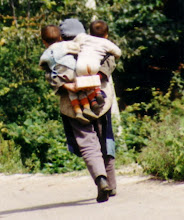
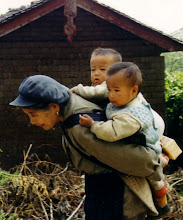
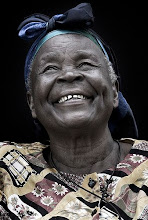
While I was looking for something else I came upon a 2005 review of my book A BALCONY IN NEPAL: GLIMPSES OF A HIMALAYAN VILLAGE. My favorite line is "Written by an unlikely trekker -- a 70 year old grandmother..." Eli Bendersky, the reviewer, has given me permission to post the review, so here it is: http://eli.thegreenplace.net/2005/11/13/book-review-a-balcony-in-nepal-by-sally-olds/ "November 13th, 2005 at 11:31 pm When I strolled through a small bookshop in Pokhara (Nepal’s 2nd largest city) most of the books I ran into were (unsurprisingly) about mountaneering and treeking. But this was not what I was looking for. I was rather hoping to find a book that tells about the lives of Nepalis – especially the “real”, rural inhabitants of this beautiful country, and not the shop-keepers tourists usually run into. “A balcony in Nepal” is such a book. Written by an unlikely trekker – a 70 year old grandmother, it tells about the few months the author has spent in Badel – a small village in the east of Nepal, not far away from Mt. Everest. Mrs. Olds trekked a couple of times in Nepal with her husband and fell in love with the country, to which she came back several times, on a quest of “looking for herself”. The narrative is autobiographical, feeling like a journal carefully collected and edited. It is very readable and can be finished quickly. The author tells about the lives of people in a typical Nepali village, their day-to-day hardships, peculiar rituals and, most of all, their apparently illogical happiness and peace of mind. The book keeps coming back to the inevitable comparison of the rich life in the west versus the poor conditions people live in Nepal, and yet somehow they don’t look less happy for it. They look more happy, if a comparison must be made. Some point about appreciating what we have… All in all, a charming book. Not only does it tell a lot about the life of Nepalis, it also raises quite a few interesting philosophical points, so it’s an interesting read even for people not really interested in Nepal itself."

Saturday, June 9, 2012

"A BALCONY IN NEPAL" NOW AN E-BOOK

This is exciting to me -- the book I wrote about an ancient way of life is now very much a 21st-century e-book, as well as a paperback edition. The e-book is much less expensive and can be ordered from www.BarnesandNoble.com, www.amazon.com, and www.iUniverse.com. The life in Badel that we experienced and wrote about has already changed greatly. Buddi, our guide, now lives in Ohio with his wife and three children. His parents and uncle (our librarian) have moved to Kathmandu. Many of the young people we met have left the village to work in other countries. For a while some of the Maoist guerrillas were occupying the library building and extorting food from the villagers, but I think they have all gone now. Our last contribution to the village was money to build toilets, which I have heard are indeed being used and taken care of. Kumari, the young girl whose surgery my fellow trekker and I paid for to correct her cleft lip, has married. So has Laxmi, the young untouchable girl we coaxed into our library to hold a book for the first time in her life. And so life goes on.