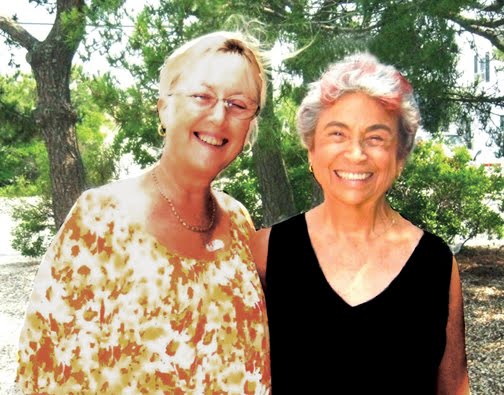
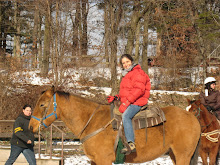
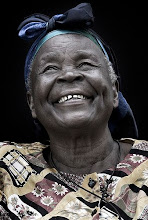
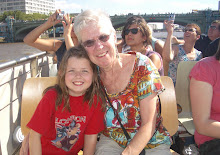
At the Women's march

At the Women's march
All Lives Matter

Never Again

Never Again
We Won't Go Back

Friday, February 8, 2013

WHAT WE GRANNIES DIDN’T HAVE WHEN OUR OWN KIDS WERE BABIES

When I see the young moms in my neighborhood walking their babies in double strollers, I think how I would have loved one of those to go out with my two-year-old and infant. When I see the clear plastic rain covers on strollers I think how great that would have been when I had to take my baby along when I walked my older daughter to nursery school. And this just skims the mommy surface. Here are a few other things we didn’t have:

Disposable diapers. Disposables had just come on the scene for my youngest baby and I saved them for special occasions, like traveling to visit her grandparents.

Convertible seats. I love those seats that go seamlessly from stroller to car to home, and how they save all that buckling and unbuckling, squshing little arms and legs in those straps, every time you need to change the baby’s venue.

The Internet. And all the services it can offer – from online ordering of groceries, diapers, pet food, and other necessities we didn’t have time to go out and buy (but somehow we found the time -- usually).

E-readers. And how much easier it can be with them to read while breastfeeding, so you don’t have to use both hands to hold the book and turn pages.

Workout videos. So in the privacy of your own home you can snatch a few minutes at a time to shed those post-partum pounds.

Instagram and Picasa. So you can share photos of your DBB or DBG with the grandparents without having to shlep to the store to get prints made.

Skype and FaceTime. So you can let your parents meet your babies – and "babysit" virtually with your bigger kids while you tend to the baby.

Cell phones, of course, with all their convenience as described in The New York Times

But what we did have, which modern moms have too, were breasts – so we could give our babies the best start in life by breastfeeding them, as the most modern moms can still do today, thanks to help from lactation consultants and, of course, books!

Thursday, January 31, 2013

50th ANNIVERSARY OF “THE FEMININE MYSTIQUE”

The Veteran Feminists of America, a group I’m proud to belong to, is celebrating the anniversary of this breakthrough book, broadly hailed as one of the most important books of the 20th century. And I'm proud to have contributed my own commemoration of this important milestone by repeating words I spoke when I presented Betty Friedan with the Career Achievement Award given by the American Society of Journalists & Authors (another group I’m proud to be a member of), and then words I wrote for the ASJA Newsletter when Betty died. My words are below. To read other stirring remembrances, go to the anniversary blog.

Almost 35 years ago, in 1963, I was a young mother with three small daughters. My life plan had always been to be a full-time wife and mother until all the girls were in school all day. And then I would pursue my dreams. But now my baby was only 18 months old, and I didn’t think I could keep my life on hold for five more years without going crazy. I thought my restlessness was my problem.

And then I read a book that changed my life. That same book changed the lives of millions of other women, too, as we received powerful, ringing confirmation that our feelings of alienation and frustration were not a repudiation of our womanhood, but an affirmation of our personhood. The writer of that book hadn’t started out to write it. As a highly successful freelancer, she had expected one of the major magazines in which her articles regularly appeared to publish her finding that an entire generation of women were feeling unfulfilled doing what women were supposed to do – take care of their homes, their children, and their husbands, while those same husbands were out in the world working at the jobs they had been educated for. But every one of the major women’s magazine editors – all of whom were men – refused to publish her findings. They said, “This is not where American women are today.” She knew better. So what was a writer to do?

This writer wouldn’t be silenced. Instead, she expanded and interpreted her research and in so doing gave millions of women a voice that heralded a worldwide revolution. The book, of course, was The Feminine Mystique and the writer was ASJA member Betty Friedan, whose career exemplifies the criteria for ASJA’s Career Achievement Award.
Betty is the ultimate exemplar of the power of the pen to change individual lives, and to bring about broad, sweeping changes in an entire society, so that the world my daughters are living in today is a different one from the world that existed before The Feminine Mystique was published. Based on the overwhelming response to her book, Betty built on the ideas and the determination it inspired, and
• three years later, in 1966, founded the most influential organization in the women’s movement, the National Organization for Women. She became its first president, and then went on
• to organize Women’s Strike for Equality,
• to convene the National Women’s Political Caucus,
• to serve as a delegate to both White House and United Nations conferences on women and the family,
• and to have a long personal audience with the Pope. Or maybe he had the audience with her?

She has lectured and taught all over the world, raising the consciousness of college students and adults in all walks of life. But at her roots – besides being a social activist, an academic, a mother, and a grandmother – Betty has always been and continues to be a writer.
• She went on to write about the ramifications of the women’s movement in magazine articles and in two other books charting important developments in the movement:
• It Changed My Life reported on feminism’s effects on women around the world; and
• The Second Stage acknowledged the importance of women’s relationships with men, children, and other significant others in their lives.

Betty then went on to pursue another highly controversial topic, the pervasive attitudes equating old age with physical and mental breakdown. Drawing on her extensive research, as well as her own life experiences, she wrote The Fountain of Age. This landmark book, published in 1993, persuasively demonstrates that “aging is not ‘lost youth’ but a new stage of opportunity and strength.”

Betty Friedan has received numerous honorary doctorates of humane letters and law. She has been named on list after list of the most influential people of the twentieth century. It gives me great pleasure to add to the many awards and honors she has received by bestowing upon her the American Society of Journalists and Authors Career Achievement Award. Betty, we’re proud you’re one of us!
---------------------
Epilogue after Betty's death in 2006:

With Betty Friedan's death on February 4 at the age of 85, she has received one encomium after another in the media, in recognition that she was one of the most important people of our time. Her momentous influence stemmed from The Feminine Mystique, according to The New York Times "widely regarded as one of the most influential nonfiction books of the 20th century." The Times also wrote, "Rarely has a single book been responsible for such sweeping, tumultuous and continuing social transformation." By the year 2000 Mystique had sold more than three million copies and has been translated into many different languages. For those members who were too young to have read it earlier, I urge you to pick it up now -- it's a great read and it offers an important window into the history of America 's women.

From the lengthy obituaries marking Betty's extraordinary accomplishments, I learned more about Betty's life pre-ASJA -- actually, pre the Society of Magazine Writers (SMW), as we were known when the Society was formed in 1948. A fellowship recipient at the University of California, Berkeley, she studied psychology with Erik Erikson, an interest that showed in her writing, and especially in her seminal work, The Feminine Mystique. She got her start as an editor in labor movement publications, and then went on to her successful freelance career. She joined SMW in 1954 and remained a member until 2000. Her last book, a memoir titled Life So Far, was published that year.

Betty was far from a one-note singer. According to her good friend TV journalist Marlene Sanders, "Friedan was more than a spokesperson for change. She cared deeply about her three children, and later her grandchildren, and in later years preferred talking about them more than about feminism." I'm even happier now than I was in 1997 that ASJA conferred our Career Achievement Award on Betty, so that while this great woman was still alive she could enjoy receiving the most meaningful tribute for a writer -- the praise of her peers.

Wednesday, January 16, 2013

FEELING GOOD BY DOING GOOD

It was one of those days when nothing seemed to be going right. I was stuck in my writing project and wondering whether I should abandon it altogether. I was experiencing some of the ordinary annoyances of everyday life with computer, phone, and the like. So I suddenly told myself that what I needed to do was to get out of myself and do something for someone else.

I had seen a notice about a website called “Create the Good,” which offers opportunities for volunteering in a wide variety of ways and at locations close to where you live. I went down the list and decided to sign up for a one-day commitment to help out a nonprofit organization called “The Bridge,” which helps vulnerable New Yorkers, including the homeless, people suffering with serious mental illness, substance abuse disorders, and HIV/AIDS. The Bridge needed volunteers at an opening at the Museum of Modern Art of paintings created by participants in its arts therapy program. As soon as I had signed up, I felt better.

I felt even better yesterday when I helped at the event. Along with a few other volunteers (all of whom young enough to be my granddaughters), I made little packages of fork, knife, and napkin; chatted with my fellow helpers; staffed the food table to keep it well-stocked and neat; answered questions from attendees and directed them to specific artworks; listened to speeches by some of the artists (one of whom said this was the first time he had ever spoken in public) and by the director of the arts therapy program, Judith Raskin Rosenthal. I was impressed by the program, by how much it had helped its participants, and by all the people who were making it work.

I came home completely satisfied that I had given my few hours to a most worthwhile cause – and put my own life into perspective. How lucky I am not to need the kind of help these people were getting! I have made many volunteer commitments in my life, and every time I serve others, I feel good about my own life. I’ll continue to look for additional ways in which I can help others – and by so doing, can help myself.

Tuesday, December 11, 2012

Normal Grief or Major Depression?

Because many of us at grandparent-age have suffered the loss of someone we loved, a report in today's New York Times about the forthcoming revision of the American Psychiatric Association's "bible" for practitioners, its Diagnostic and Statistical Manual (DSM), is worth mentioning here. Grieving people often show the same symptoms as clinically depressed people -- you can’t sleep or you’re sleeping too much, you’re eating too little or too much, you can’t concentrate on work or even a good book, you can’t enjoy the people and activities that you once did, and overall, you’re a mess. Some members of the American Psychiatric Association are now defining deep grief that lasts more than two weeks as major depression, but most of us who have mourned a loved one know that symptoms like these often last well beyond two weeks or even two months, or much longer.

So it’s startling to note that the DSM, which has up until now excluded grief from the diagnosis of depression, has now eliminated the bereavement exclusion and made deep grief lasting longer than two weeks an official diagnosis. This would imply that most bereaved people need medical help. Not all professional agree.

For example, Marc E. Agronin, M.D., a geriatric psychiatrist, says, “grief is part of the human condition, not a psychiatric problem.” And Joseph Nowinski, Ph.D., a clinical psychologist and coauthor of "Saying Goodbye: How Families Can Find Renewal through Loss," has expressed concern that normal signs of grief may be wrongly diagnosed as major depression, and therefore medicalized and treated out of context. Jerome C. Wakefield, Ph.D. of New York University agrees, worrying that millions of people with normal symptoms of grief will be incorrectly diagnosed as having a mental disorder, given medication with possibly dangerous side effects, stigmatized for grieving more intensely, and pressured to quickly get over the loss of a loved one before they’re ready.

Psychiatrist M. Katherine Shear says that normal grief and major depression should not be confused. “It's typically not difficult to tell the two states apart," she told me. “Grief is a response to bereavement in which the sadness is always accompanied by a deep sense of yearning and longing for the person who died. The sadness is totally focused on that person.” This has been brought out in research that showed that when patients with complicated grief looked at photos of their loved ones, the parts of their brains associated with rewards or longing lighted up.

In a compromise responding to the division within the profession, DSM-V will have a footnote reminding doctors that any significant loss could cause depressive symptoms and should be carefully investigated. However, this means that people suffering a loss have to be careful they are not being over-treated.

Wednesday, September 12, 2012

THE EMPIRE STATE BUILDING ON SEPTEMBER 11

When my 24-year-old granddaughter, Maika, who has visited New York every year for the past 14 years, said that she had never been to the top of the Empire State Building, I promised to take her there. This is not something that New Yorkers generally do unless we’re entertaining out-of-town or out-of-country guests – the last time I went up there was twenty years ago when Salamsing, who had been my husband’s and my trekking guide in Nepal, had visited us.

I am so glad that Maika and I went. We chose September 11, partly because of its symbolic meaning and partly because it was a cool, crisp, clear evening when our views of New York City would be the best possible. Probably because of the sad anniversary the crowds were much lighter than usual and so we had very little waiting time. Also because of this memorable date we were able to see the Tribute in Light, the two columns of light created by 88 searchlights that rose up in the sky next to the Freedom Tower, still under construction at the September 11 Memorial site. The Tribute is produced every year for this one night to offer a surreal remembrance of the attacks and of those who had perished in the towers that once stood in its place.

Seeing this huge metropolis spread out below us – lights aglow in building after building, car traffic running smoothly, a picture of a city going about its business – provided a comforting sense of the way we recovered from those ghastly attacks. Although no one will never forget the horror of that day and its aftermath and all those innocents who died in that madness, the utter normality of the vista spread out before our eyes represented to me the strength and vitality of this post-attack cityscape.

Maika’s and my visit was remarkably easy to manage. I bought our tickets online and printed them out at home, went to the building’s entrance on Fifth Avenue, and were greeted at every juncture, from the front door to the elevator to every floor and every vantage point by smiling uniformed guards. Although I know that New Yorkers’ reputation for being unfriendly is undeserved, even I was impressed by the extent of how helpful so many of the guides were – giving us information about the buildings below, offering to take our pictures, and giving us snippets of local history.

And of course it meant so much to me to be sharing this experience with my granddaughter and seeing it through her eyes. One of the great joys of grandchildren is to give us a fresh view of the world around us.

Wednesday, August 15, 2012

A REMARKABLE LETTER FROM A REMARKABLE WOMAN


My friend Linda Markstein gave me permission to post this letter that she wrote to a number of her friends this past Friday. A couple of weeks earlier Linda had felt so very tired that she went to her doctor. She had received a clean bill of health from him in April, but after this last visit, after taking several tests, she learned that cancer had invaded her body, including her brain. She has been in and out of the hospital since then, wrote this letter, and asked in her most recent conversation with one of our friends which political blog she should follow. I am inspired by her courage, her sense of humor, and her power. I don’t know who all the people she mentions in this letter are – I don’t think it matters. The most important thing is the woman who wrote these words.I  hope that those of you who read this and find that it speaks to you leave comments, which I can then pass on to Linda. Here is her letter:
---------------
Hello, Everyone,

I had RAD 6 today and this morning I felt pinned to the mat.  Never so  tired in my life.  I felt an urgency to get as much memory preserved as  possible because I don't know how much will be left. So far memory seems okay but not sure how long I can write.  Fear I may  become locked in.  So I wanted to explain that I am going to record as  much as possible and get you to transcribe as you have offered.  I wanted to type everything myself first (of course:  world's fastest typist) but fear that is a luxury no longer affordabe, esp. since Lefty is weak, valient but weak.  The only realistic option is to try this new strategy.  I am going to record on, I think, an iPad.  Suzanna set it up and she'll monitor it, esp until I get used to it.  I have a crack tech team so I am hopeful.

Anyway I won't have as much time to be in contact with you and I wanted you to know that.  I have loved the messages from all over the world, esp ones involving fights about what may or may not have happened 50 or 60 years ago.  Teasing, outrageous charges.  I have many of my cousins supporting me in a disputed memory against another cousin involving whether the latter at 6 or 7 years old actually yelled out the window in Belleville, KS that my grandmother and her friend, Mrs. Welch were "god damned stupid old bitches" because they wouldn't buy him "one god damned stupid flower."  He, Billy Sherman, had his head out the back window  broadcasting this message.  Grandma pressed the electronic window  button -- and nearly decapitated Billy -- and never said another word about it.  Billy (now Bill and some sort of proper, extremely successful something or other) is trying to argue that it is the desperate ploy of a dying woman.  But everyone is on my side.  That's the power that brain damage and impending death, etc., etc. can bring.  I hold a lot of good cards right now and it is very difficult for Bill(y) to have any chance in this game.  Good bye, reputation as a pillar of haute SF society!  Ha ha ha

So anyway I am having a lot of fun.  But I don't have so much time and I have incredible weakness and, let us not be too oblique, a lot of brain damage.  So I have got a lot to do.
Yesterday I got the only good piece of advice from Brother Bill that I have ever received:  He said, "Linda, I think you should rest less and work harder."  He probably meant it as a joke -- but I chose to take his advice literally.  It is one of the few times I have not felt it necessary to simply respond, "Oh, shut up, Bill."  I just said, "I think you're right.  Thank you for sharing."

Very, very tough frightening morning because I felt pinned to the mat by exhaustion and I became worried about having enough energy left to do the stories, etc.  Didn't think I could make it to therapy, as if that were an option -- but suddenly got energy and managed just fine, well fine in the scheme of things.  That was heartening but this all was a huge wake-up call about the need to maximize time and use adapted strategies.

You must all continue to write to me constantly and send me data from the real world.  Teddy analyzes polls, breaks them down and explains them.  Love it..  Sangeeta reports from an economics conference in Mexico where she is working with someone who turned out to be Trotsky's great grand-daughter.  Dave writes about the horrors of modern parenting style, etc.  -- Esther sends a poem a day and a kind of a blog about her writing process.  So when I am not working, I can quickly get back into the world and not miss out.

Just quickly, my walking is much better and I could button some little tiny buttons today with almost no problem.  How great to be able to walk again without constantly looking for a supporting wall or handhold.  I wouldn't go out without someone because I might lurch on the street but I can walk pretty well.  Donald is impressed and probably a little jealous.  He still is not above giving me lots of pointers (from his wheelchair).

BTW, Donald and I have initiated a private time from 5 to 6.  No one can come over.  Travis and Melissa must go upstairs.  We must have our  sacred time together.  He's been wonderful.  We worked on my funeral (we like to do that sort of thing unlike most people).  He wants to recite the lytrics to Body and Soul (will be hard for him but, hey, give it a shot).  Decided to get Charles Davis to play Body and Soul and Night and Day, our theme songs.  Want a super, super high mass at St. Peter's followed by an incredible wild party on the river (Spirit Cruise) where everyone dances and drinks and kids get wild -- and everyone remembers it later as the most fun they ever had.  Do you think a permit could be gotten for a few fireworks?  How about a huge banner:  BLAST OFF, LINDA.  Since I will be cremated, no need to have the service immediately.  Maybe wait six or eight weeks so everyone can come.  Wouldn't it be a riot to send out SAVE THE DATE cards!

Well, you get the picture:  a huge opportunity to have some fun.  Don might not, probably would not, be able to take part in this (since he needs to be in bed by 8) but he would certainly not deny me my last cosmic laugh.

Mehitabel's Song (Don Marquis)

there'a a dance or two
in the old dame yet
beieve me you
there s a dance or two
before i m through
you get me pet
there s a dance or two
in the old dame yet

life s too dam funny
or me to explain
it s kicks or money
life s too dam funny
it s one day sunny
the next day rain
life s too dam funny
for me to explain

but toujours gai
is my motto kid
the devil s to pay
but toujours gai
and once in a way let s lift the lid
but toujours gai
is my motto kid

thank god i m a lady
and class will tell
you hear me sadie
thank god i m a lady
my past is shady
but wotthehell
thank god I m a lady
and class will tell

Work begins in earnest tomorrow.

P.S.  It has been announced that Armond Habiby (Anne's father, divorced some 45 years ago) is planning to fly in in a couple of weeks to see me.  I asked Anne if this is being seen as some sort of exit interview!)  He's a wonderful, completely unique person that I absolutely could not live with.  We were two strong pure elements that could not mix -- but we produced an absolutely unique, extraordinary human being.  Armond has such a dominating personality that this may be too much drama for me and I may just send him a letter.  His drama may be too much, too overwhelming.  But I am touched.  I just don't want to  lose control of the scene and become a secondary player in his big scene.  -- Still, it does add another note of outrageous drama.  Who else does this kind of thing?

but toujours gai, my friends

Linda

Tuesday, July 31, 2012

TRYING TO ACCEPT THE SUICIDE OF A BROTHER

Thirty-five years ago, on March 14, 1977, The New York Times published an essay that I had written about my brother’s suicide. I received a flood of letters from readers telling me that my article had been helpful to them. Last week my daughter Dorri, in consoling a friend whose father had committed suicide, sent her my article and also posted it on her own salon.com blog. Since salon.com named the piece an Editor’s Pick and since it garnered more than 388 views on the website, it seems to be still relevant, and so I am posting it here, with hopes that it will bring comfort to those whose lives have been touched by a suicide of someone close to them.

-------------------

On February 25 my brother took his own life.


In the morning he went to his safe-deposit box to withdraw his will and his life-insurance policies so that whoever would settle his affairs would be spared as much inconvenience as possible. In the afternoon he went to the barbershop for a haircut and a shave. The stroke he had suffered 12 years before, at the age of 44, had taken from him the use of his right hand. He was no longer able to shave himself as closely as he—ever-meticulous—liked to. On the way home he stopped to say goodbye to a friend. He told her he was going on a trip. To her question, “Where?” he smiled broadly and said, “It’s a secret.” Then he limped down the hall to his own apartment.

He took off and carefully folded the new clothes he had put on just as carefully only a short time before, sat on the edge of his bed, and with his still strong left hand pulled the trigger that sent a single bullet cleanly through his heart. The coroner told us later that he had died even before he fell back upon the bed.
My brother left notes—to his sons, to his mother, to his doctor, to friends, to me. They all held caring messages of gratitude for friendship and love given over the years. In a couple he left practical instructions. In none did he leave any explanation for his final, carefully executed act. He didn’t really have to.

The reasons are not hard to find. They tumble over each other. That clot that had stopped the flow of blood to his brain for mere minutes had changed his life.
He had been able to compensate to a great degree for his physical disabilities: the paralysis of his right arm and leg. But since he had never regained fluent speech or perceptive judgment, he had been unable to resume his work as a highly successful sales executive. Nor had he been able to find another job that both satisfied his need to achieve and was within his capability.

Furthermore, the insult to his brain had also affected his personality. Within two years of the stroke, his marriage of 22 years had ended. His friends found it hard to spend an evening with him and saw him less and less often. His only brother (to whom he had become close since his illness) died, and then his father, who had in recent years become his counselor, his confidant, his best friend.

Eventually, in the hope of recapturing some of his former professional success, he moved back to California, where he had been living and working until his stroke. Now a continent away from the east coast where his parents, his sons and I lived, he had neither friends nor family nearby. His connections with both his sons ebbed and flowed. While he and they mended their relationships, they remained separated by the miles. A fall in the garage while getting his car resulted in a broken hip, surgery, and a slow, painful recovery.

And then the final blow: The small business in which he had invested the entire amount of the insurance settlement he had received after his fall was thousands of dollars in debt. Not that much money in the business world, but a hopeless sum to my brother. His lawyer advised bankruptcy. He shook his head.

My brother looked at the years yawning in front of him and saw nothing but more pain, more loneliness, more thwarted hopes. For years he had maintained an air of unflagging good spirits so that he became the wonder of all who knew him.

Whatever pain or doubt he felt, he never showed. He had tried one venture after another to become self-supporting and avoid being a burden to his aging parents, to his sons, and to me, still the “kid sister.” Every balloon he had tried to inflate had burst in his face, until he could find only one solution. And so he shot himself.

Intellectually, I believe that every one of us has absolute power over our own lives. In my mind I believe that the decision to end one’s life can be a rational act of courage and dignity. And yet I am having great trouble accepting my brother’s decision.

I feel guilty, assailing myself with regrets. If I had been closer to him, if I had called him and seen him more often, if I had offered him more money, if I had made it easier for him to fail instead of advising him so strongly against his latest business venture, if I had intervened in his marital problems, maybe he would not have taken this final desperate step.

I feel angry that he could have done this to our mother, who had already suffered the loss of her only other son and of her husband. I resent his leaving me with the impossible task of easing her burden.

I feel anguished, imagining the depths of unhappiness never openly displayed that drove him to this last step.

The wise and compassionate rabbi who conducted the memorial service for my brother spoke privately to the family. He urged us not to torture ourselves with “if only’s.” He said, “I’m not saying this to wound you, but one thing you need o realize is that no matter how much he loved you, you were all peripheral to his life. If your relationships had been central to it, he would not have left you. None of you could have given him what he needed to make his life seem worth living.”

I am trying to give my brother the respect he deserves by accepting his decision the way he would have wanted me to, by heeding his last written words not to cry over him. I hope—for the sake of the life he lived so bravely up to the very end—that I will be able to.

This article was published in a slightly different form in The New York Times, March 14, 1977

©Sally Wendkos Olds